The Room
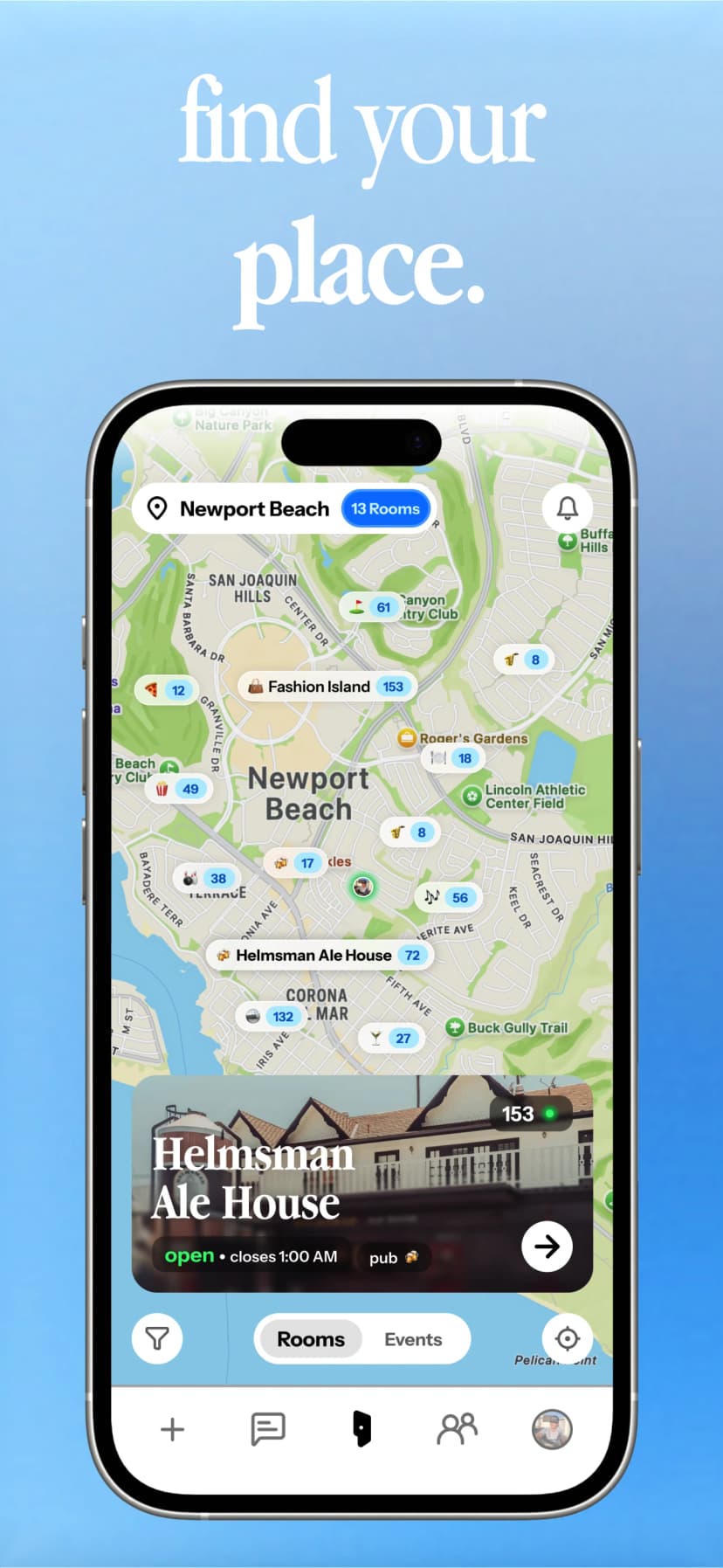
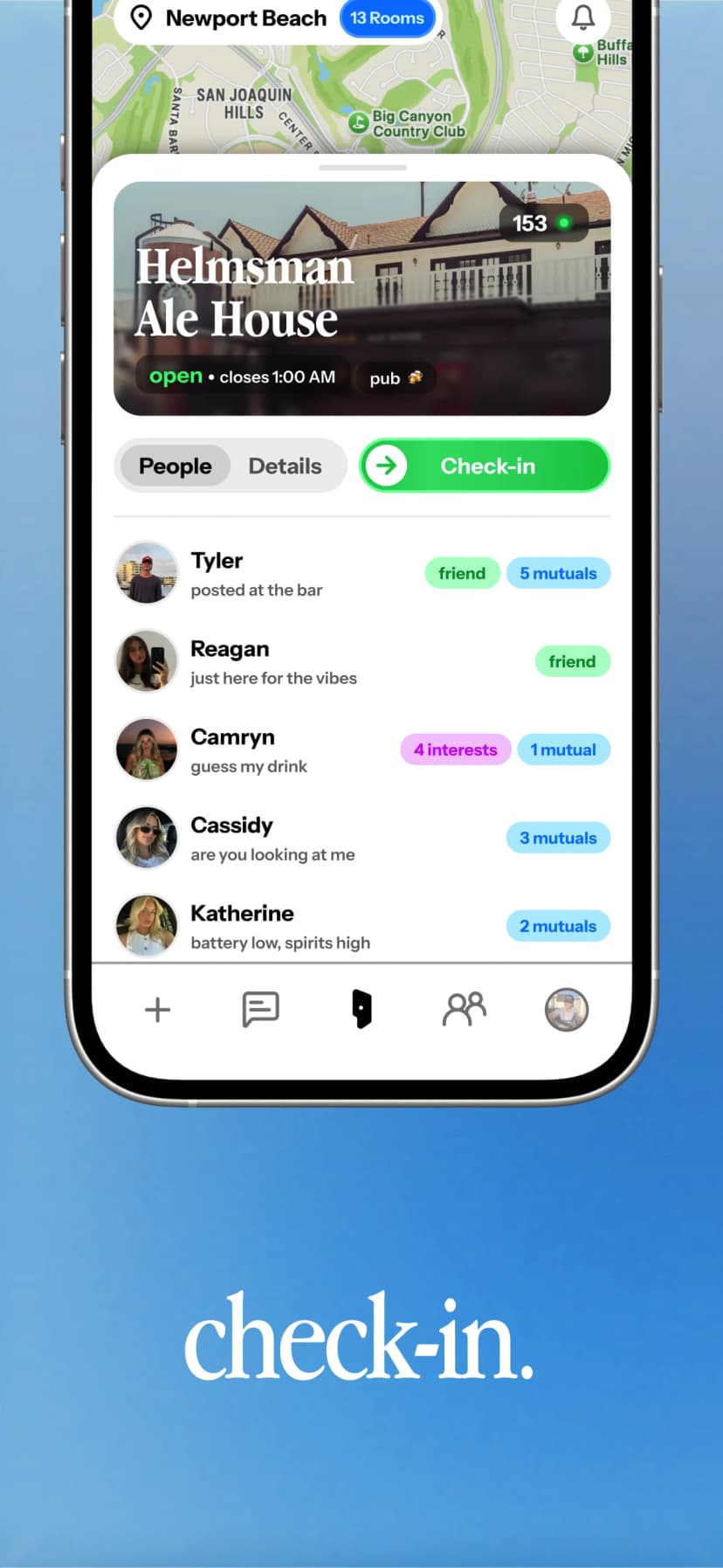
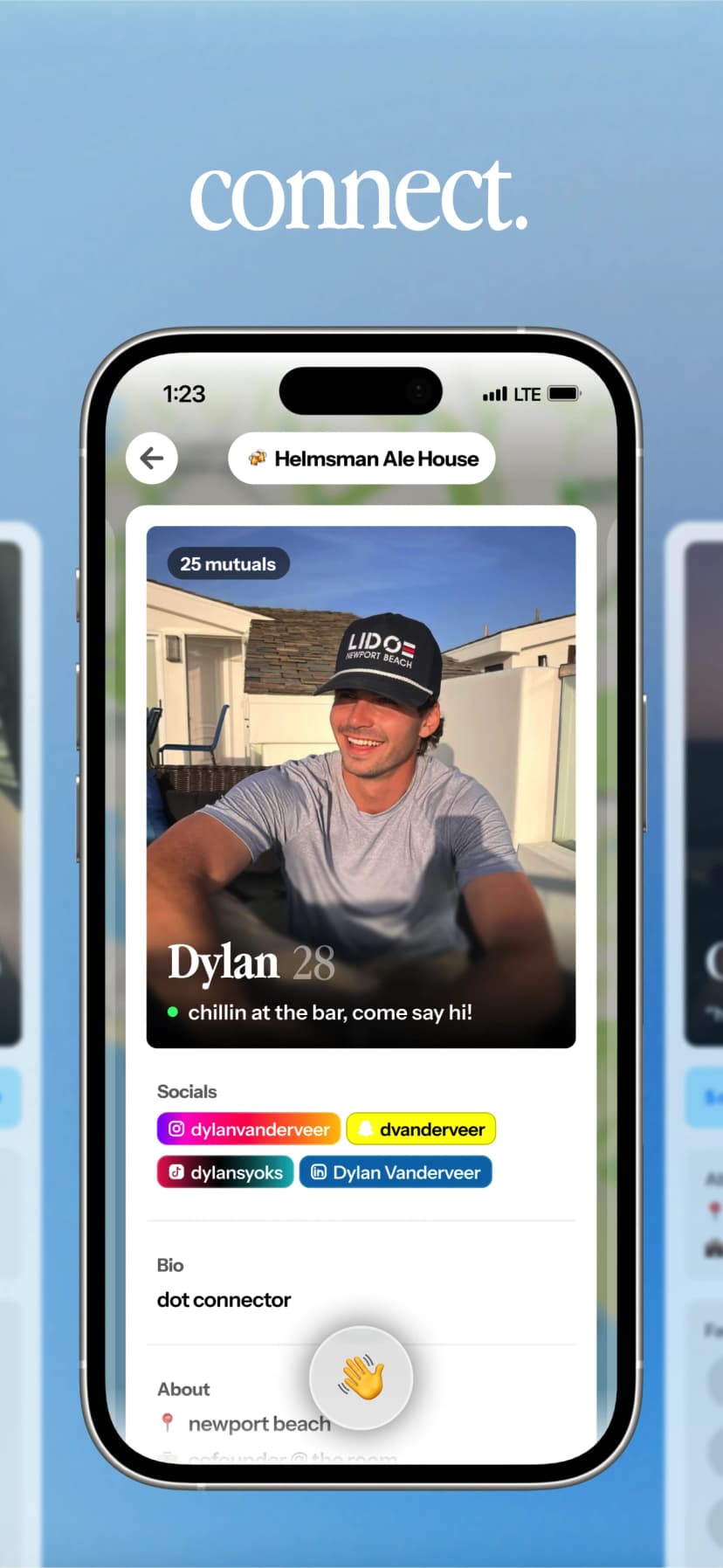
The Room was a consumer-app startup that I worked at during the summer of 2025.
The opportunity came to me after my Spotify Radar concept caught the attention of someone at The Room, and I was offered a position as their first and only product design hire.
I was ecstatic, but two things immediately started running through my mind:
First...
“Wow, look at the power of posting your work online!”
But second, and most importantly...
“I’ve never actually worked as a product designer!”
So here I am, 6 months later, to write about how it went, show some of the work and decisions that were made, and reflect on a very important step in my journey.
The Situation
The Room is a social discovery app that allows users to check into real-world venues and see who else is there in real time.
You can imagine it like some kind of mix between Snap Map and Tinder.
The product team was very small and scrappy, consisting of the founder, three engineers, Cursor, and myself!
I wasn’t coming in at stage zero; the team already had an MVP that was released on the App Store and some good traction on social media. Here’s the most viral video that is currently sitting at 900K views on TikTok:
@theroomapp Every room has a story
♬ original sound - The Room App
The video here is showing the MVP UI.
Why was I brought in? The team was aware that even though they had a working MVP, the product was in desperate need of an overhaul. With a limited runway and summer about to start, they needed work done ASAP!
Without formal analytics or a research budget, I relied on TikTok and App Store comments, informal testing with friends and family, and my own instincts as a user of similar apps.
The Problems
Users were discovering The Room through polished social media content, but the app itself didn’t match those expectations — likely eroding trust and causing early drop-off.
With that in mind, I had to get to work as soon as possible. I set out to identify what were the most pressing issues, what could be completed the quickest, and what should be prioritized.
Industry Standards
All of the issues that The Room faced could be encapsulated into one main idea; it did not meet, and definitely did not exceed, industry standards.
My go-to explanation for what this means comes from Josh Puckett where he has a section dedicated to this idea of industry standards in his course, Interface Craft.
“The apps we all use everyday form our expectations for what the standard for ‘good’ is for the majority of users. Instagram, Notion, TikTok, iOS, Linear, Figma, YouTube, Telegram, and all the other apps being used daily by millions of all contribute to the broad mental model for what software should look like, feel like, and work like. The average of this becomes an invisible bar that I often refer to as the industry standard.
No one really tells you this, but if your product or website or service doesn’t meet the bar, people will immediately discount it. They’ll assume it’s poorly designed, probably poorly made, and they won’t give you the time of day and won’t tell you why, either.”
— Josh Puckett, Interface Craft
This comment on TikTok is a great example.
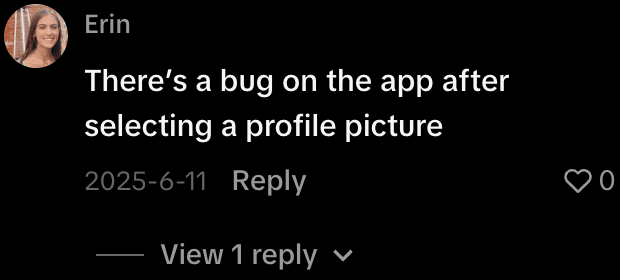
My goal was clear. I wanted to push The Room to as close to the industry standard as possible in the short time that I had.
I identified three main areas to focus on in order to achieve this: look, feel, and flow.
Look
The main thing I immediately noticed was that there was a massive gap with the visual language.
On socials, The Room was presented as classy, youthful, and aesthetic.
The app conveyed none of those same feelings or emotions. It felt cheap, dated, and sterile.
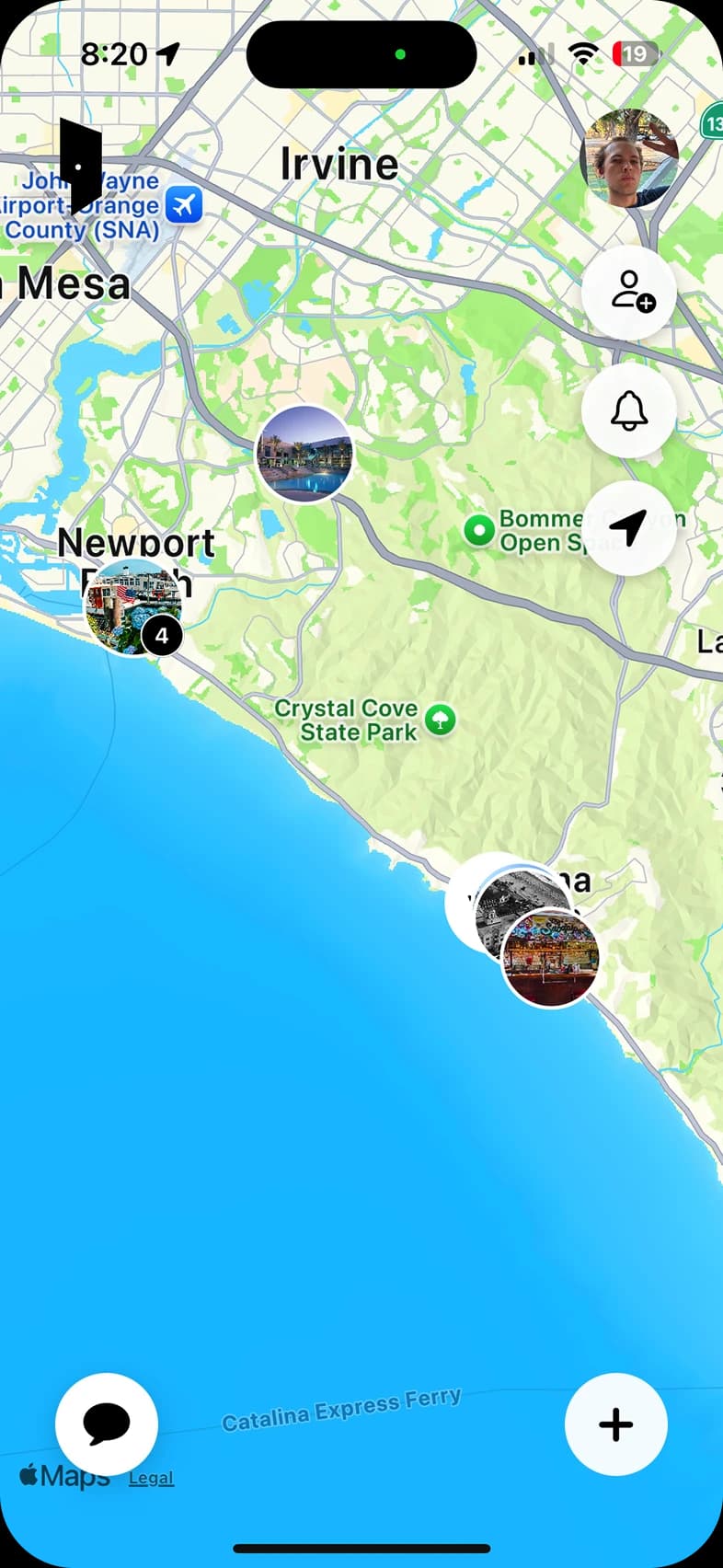
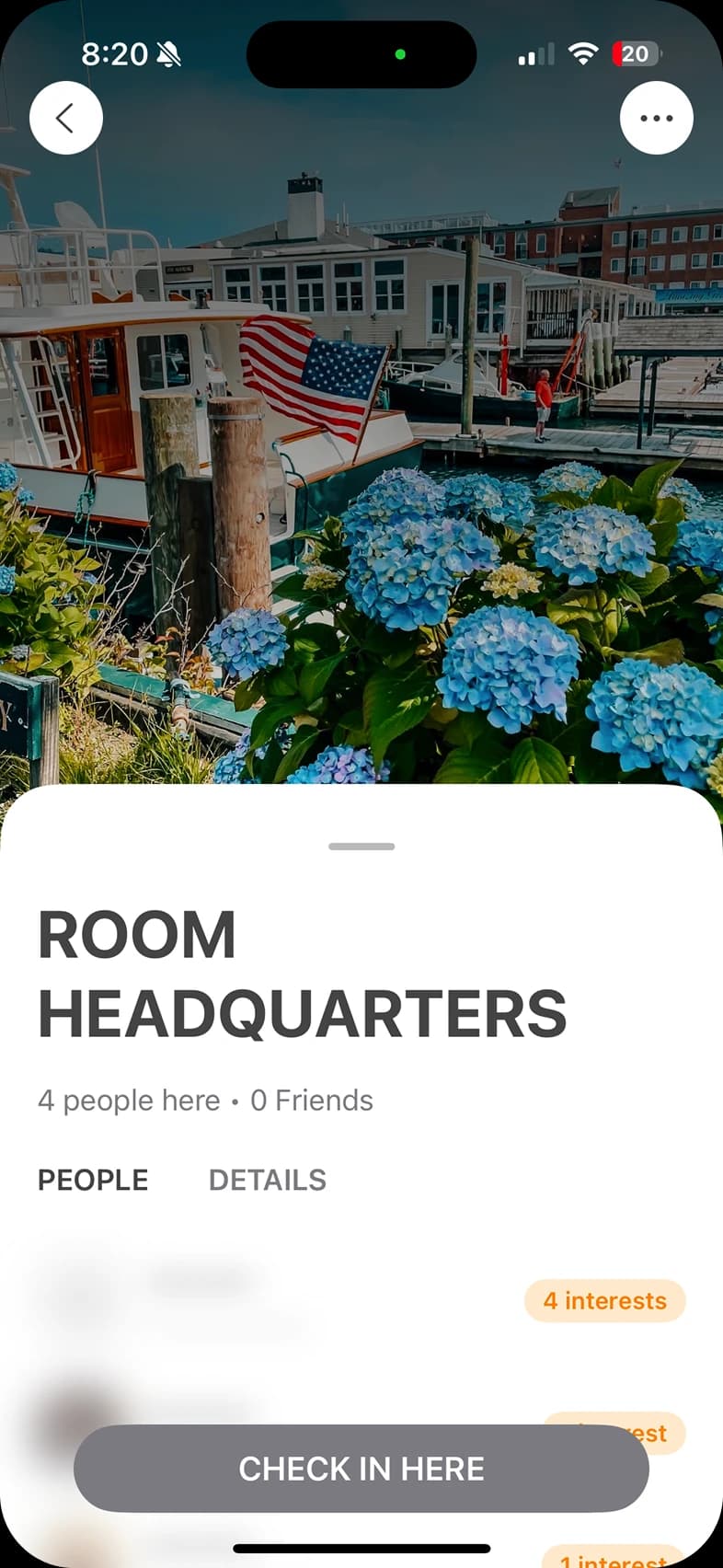
Please don’t judge me for my battery health 🫣
Feel
Getting the app to a place where it looked good was a great place to start, but a good-looking car is nothing without its engine. It mattered how the app felt, how it transitioned, how it responded to you, and how it moved.
Flow
From my talks with the founder, I knew that he had grand ambitions for what the app could be and all the features that could be added, but we had to stay focused on what mattered and what users wanted.
However, how could I know what users wanted in the first place?
The Solutions
Through a ton of back and forth with the team, we landed on two new typefaces that set the foundations.
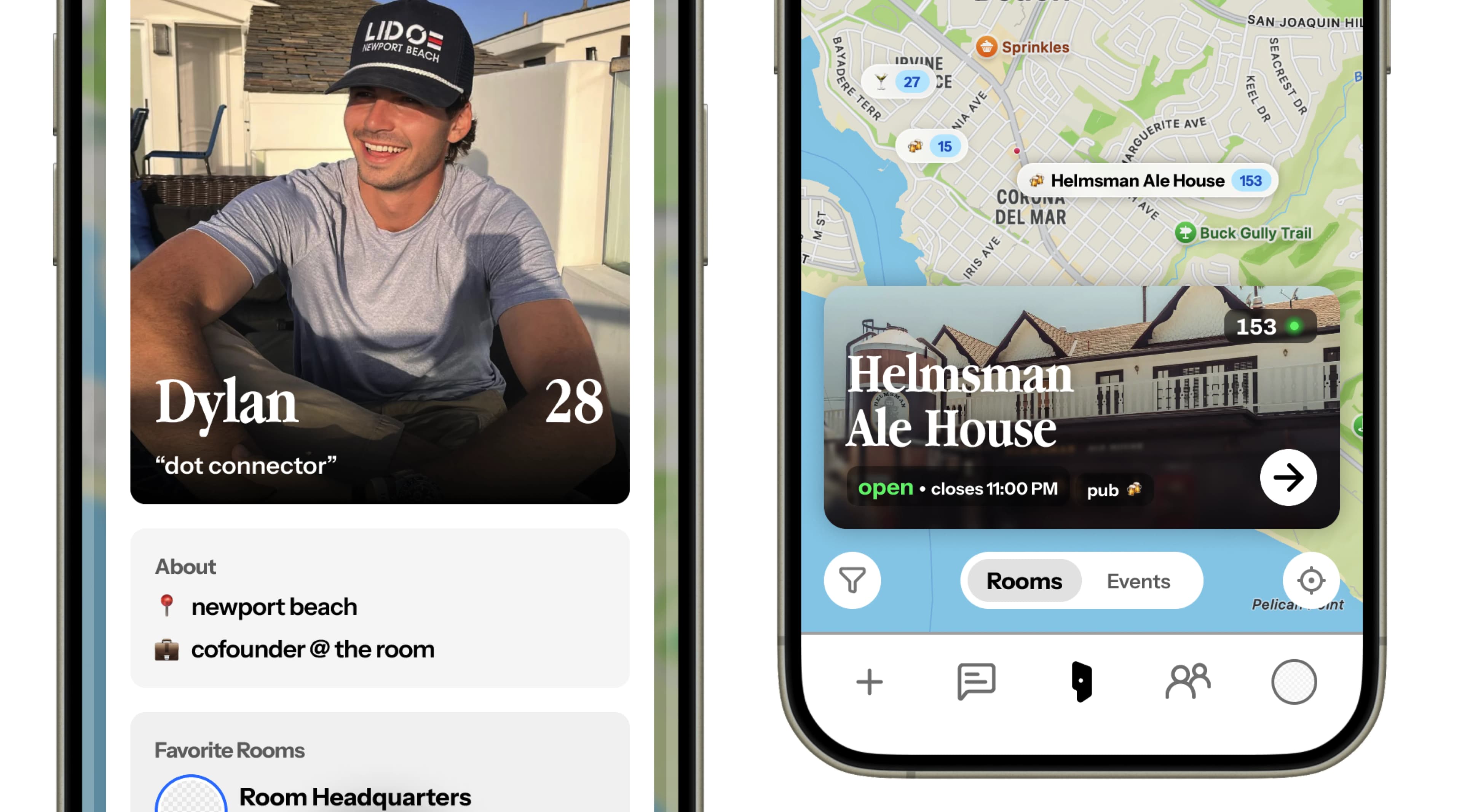
The single biggest change that got the most comments was the new typography, specifically the use of Apple Garamond for names and titles. For the body typeface, we went with Instrument Sans. It paired very nicely with Apple Garamond and stayed in line with the aesthetics we were going for.
I believe this one change was instrumental ;) to bringing the app closer to that classy, aesthetic feel while still feeling lightweight.
The Room View
The MVP UI took users directly to a new page as soon as they tapped on an icon on the map. As a result, it made the navigation of the map feel clunky while not providing enough new information to justify an entirely new page.
I knew from the start that I wanted the room view to show up as a sheet rather than an entirely new page as it followed expected patterns from other map-based applications and provided an easy way to access the map again.
Here are some of the iterations I went through to finally land on the final design. The breakthrough came when I designed the top of the sheet to be viewable on its own before being fully expanded.
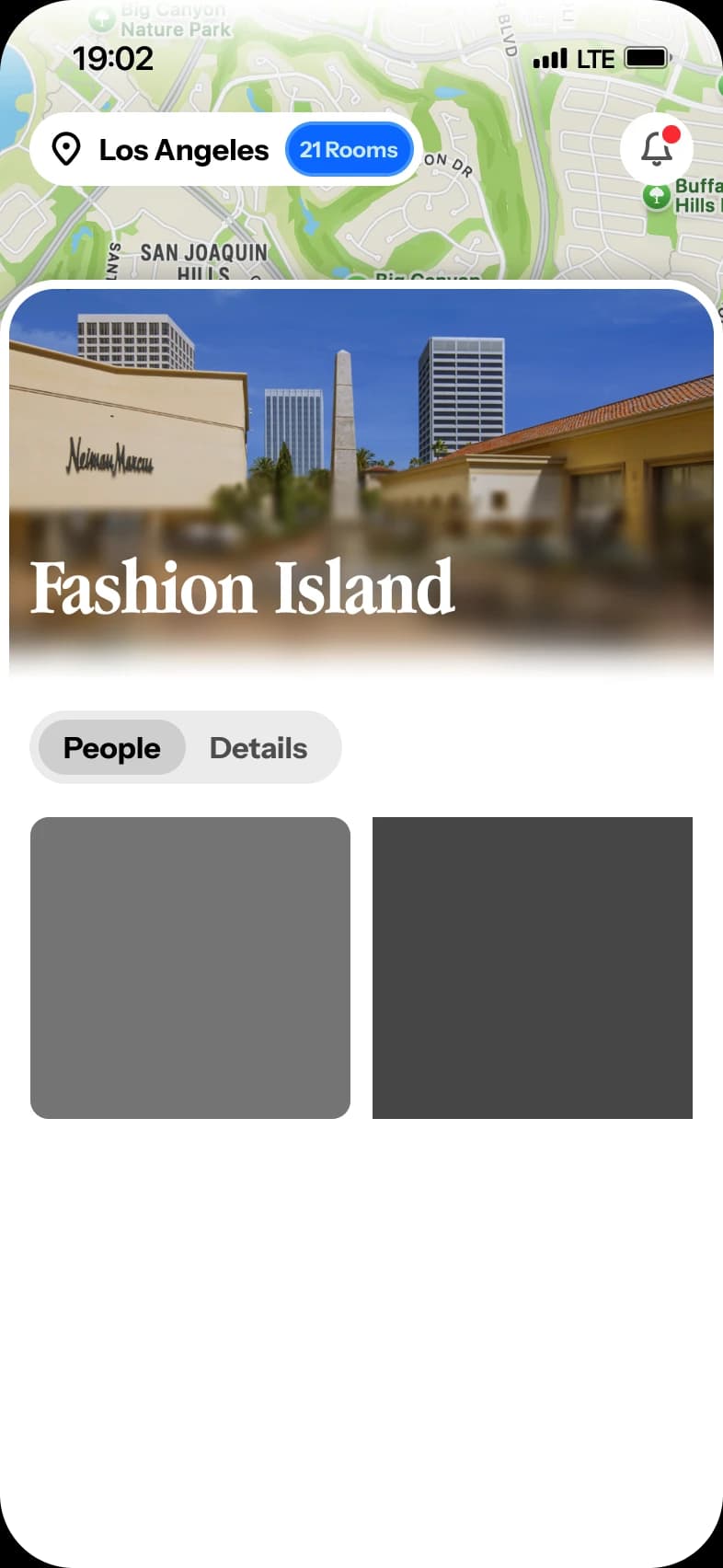
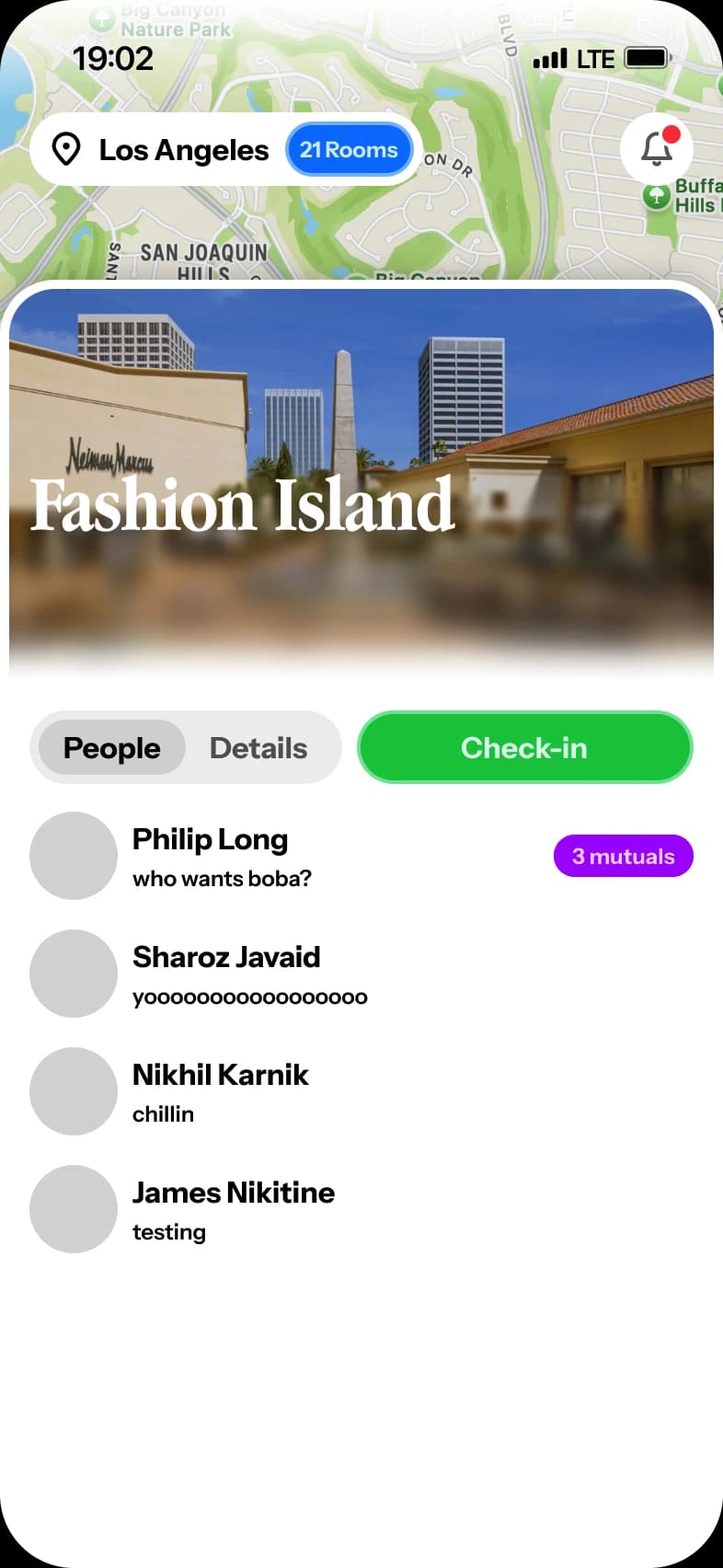
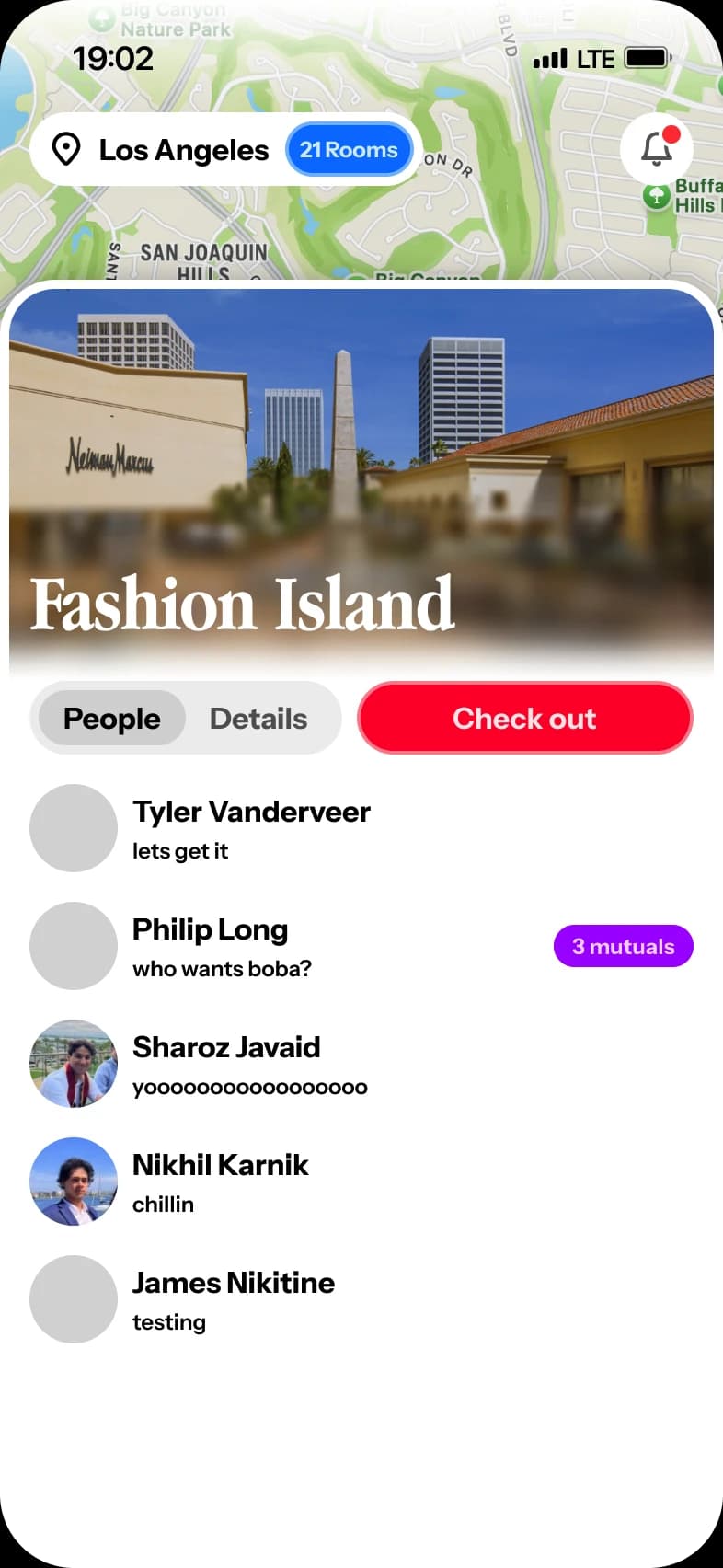
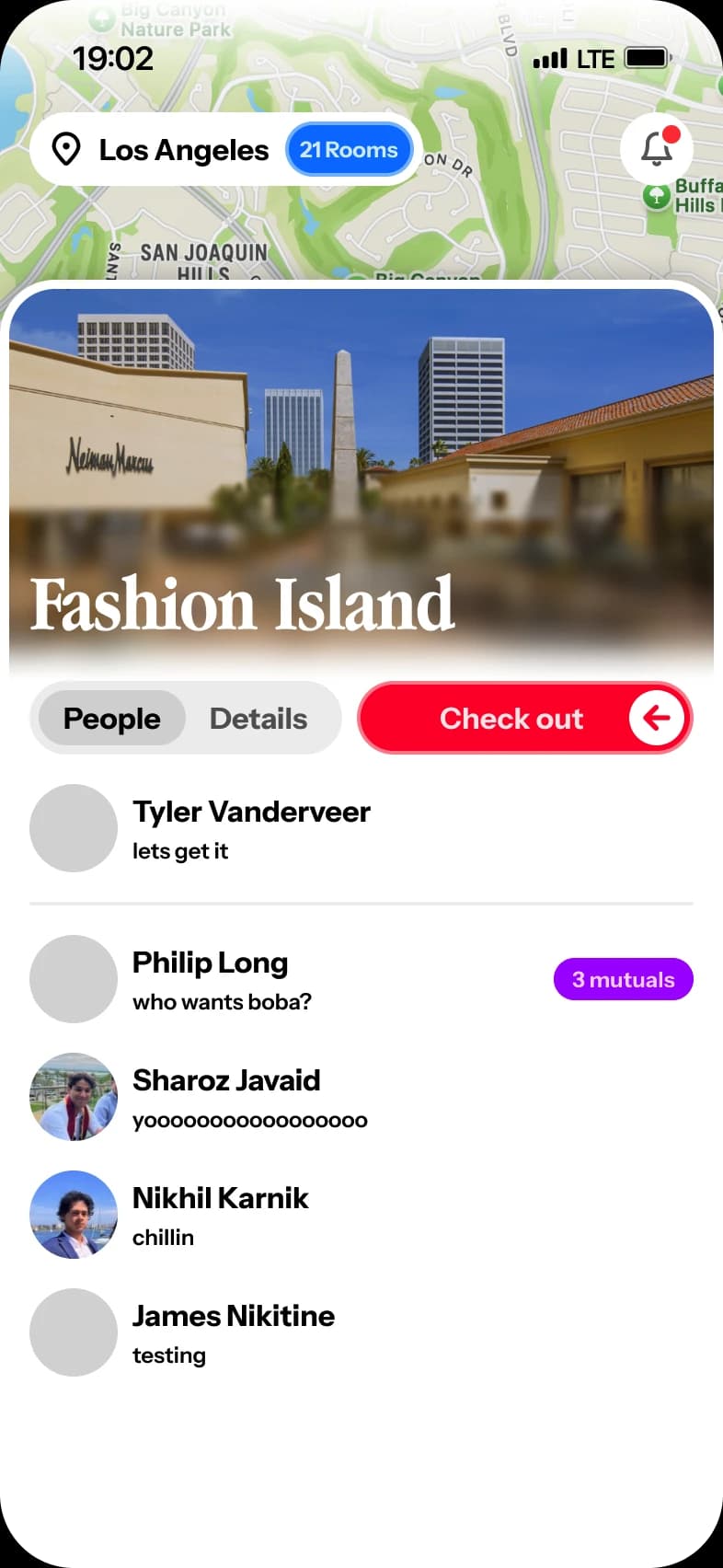
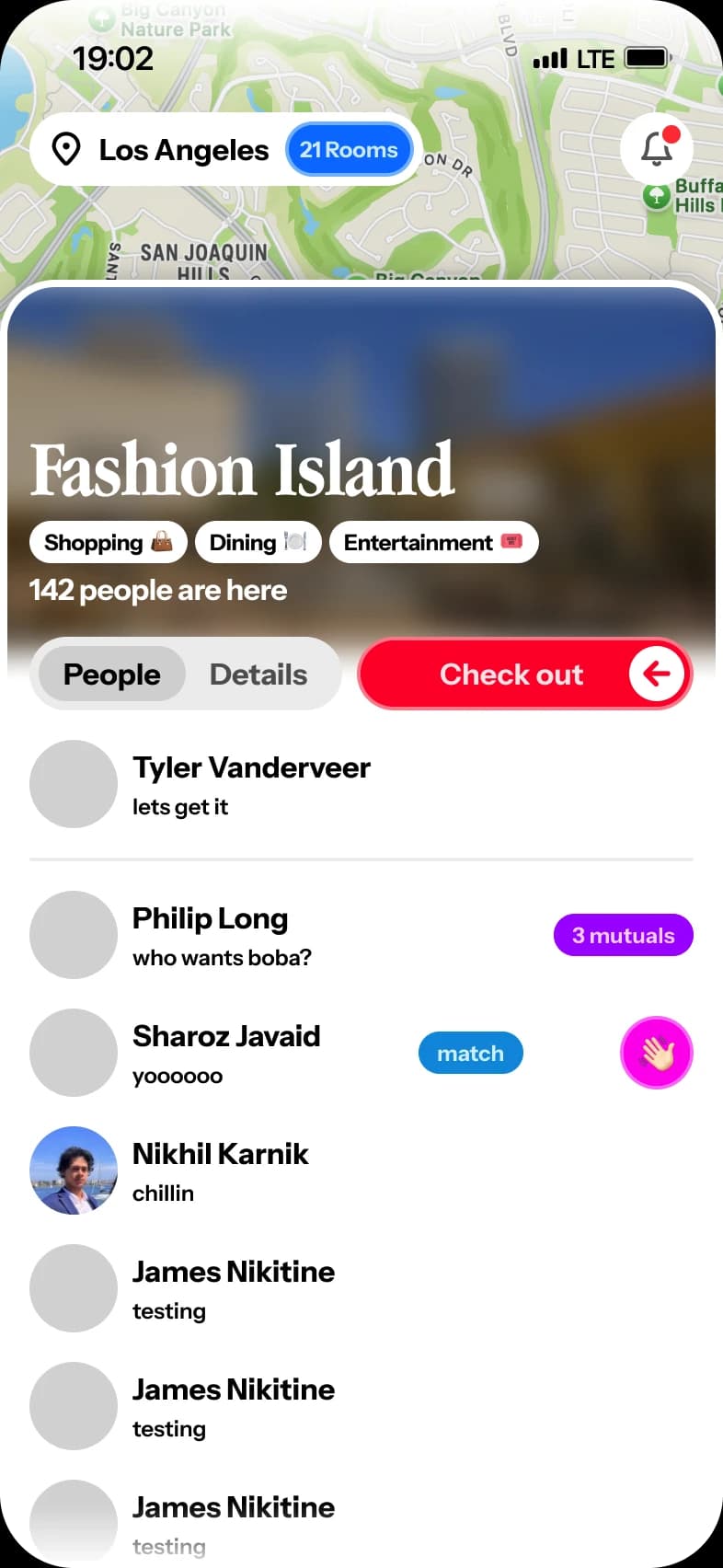
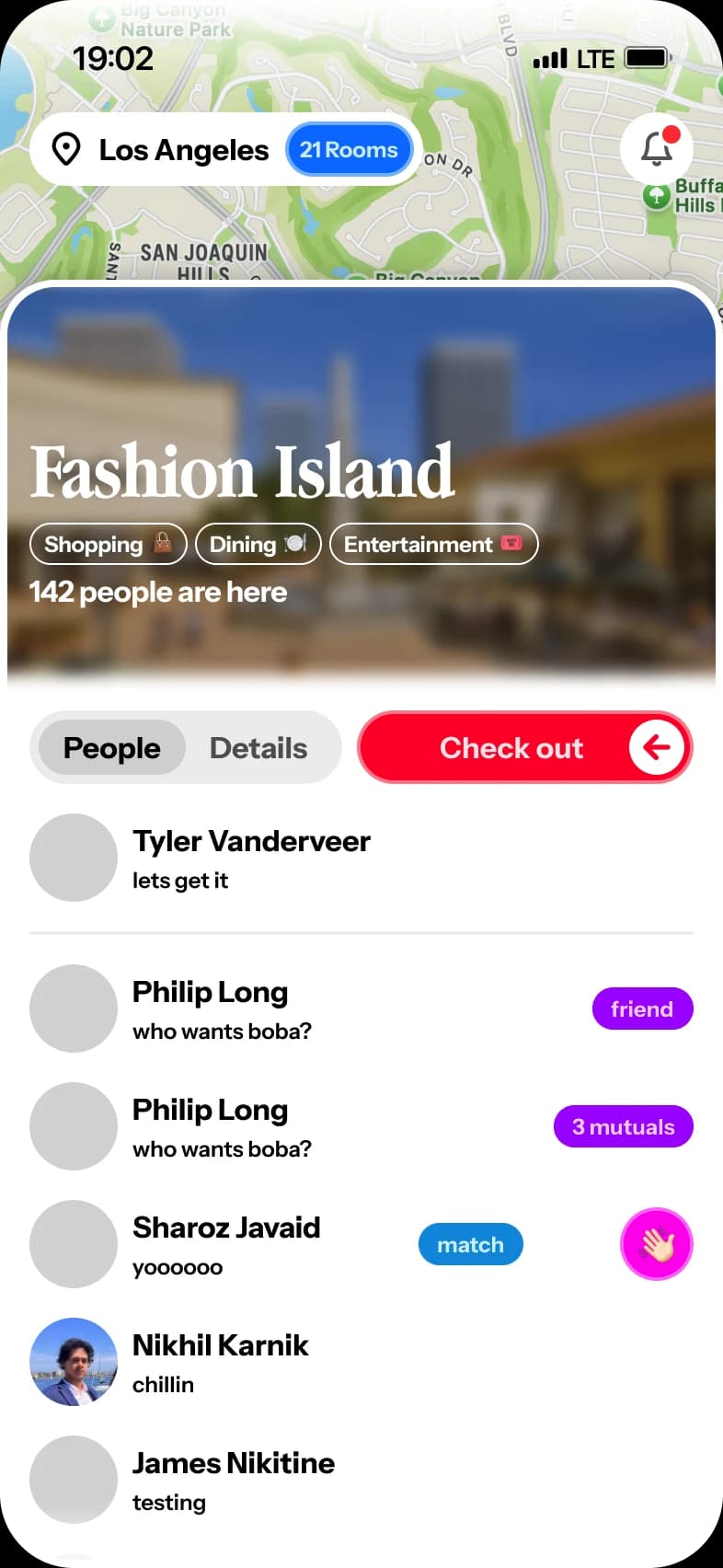
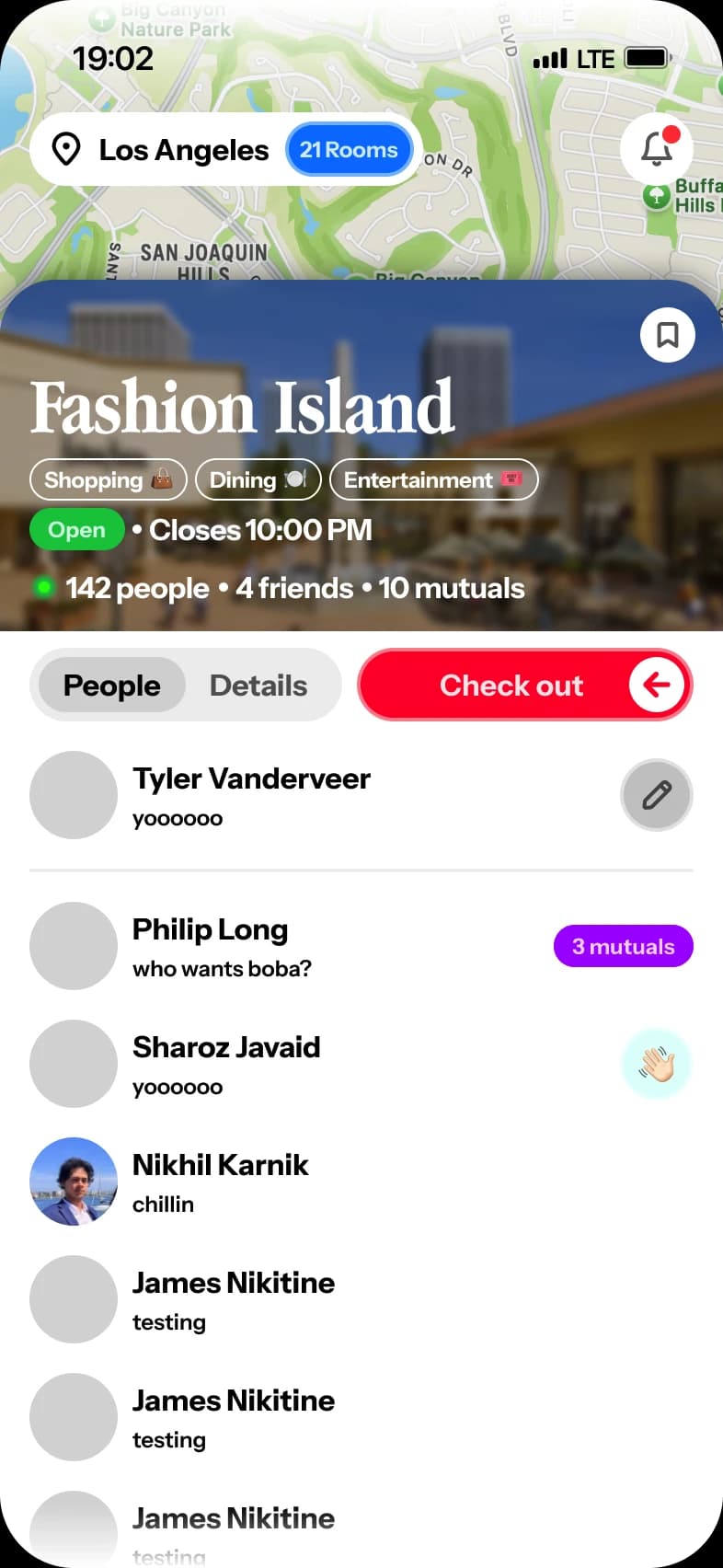
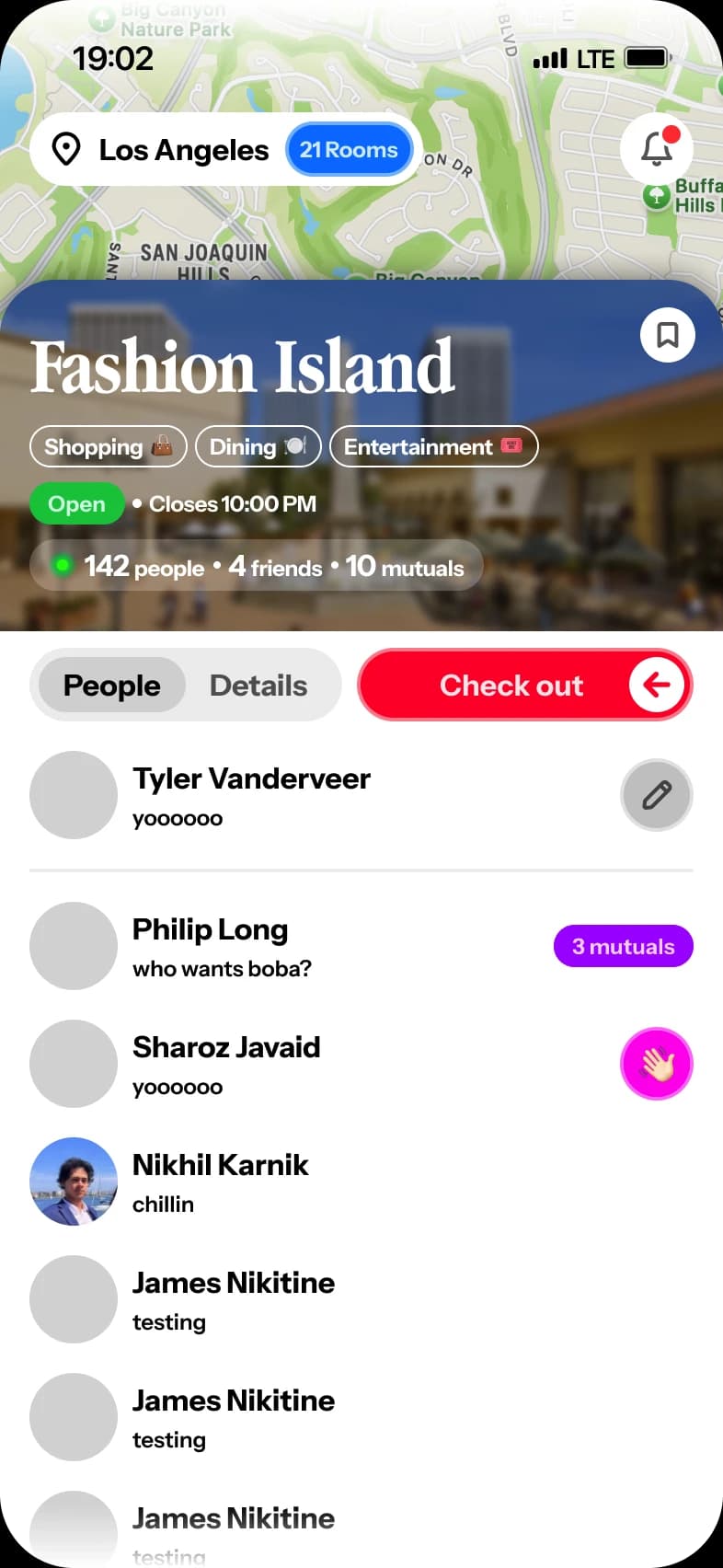
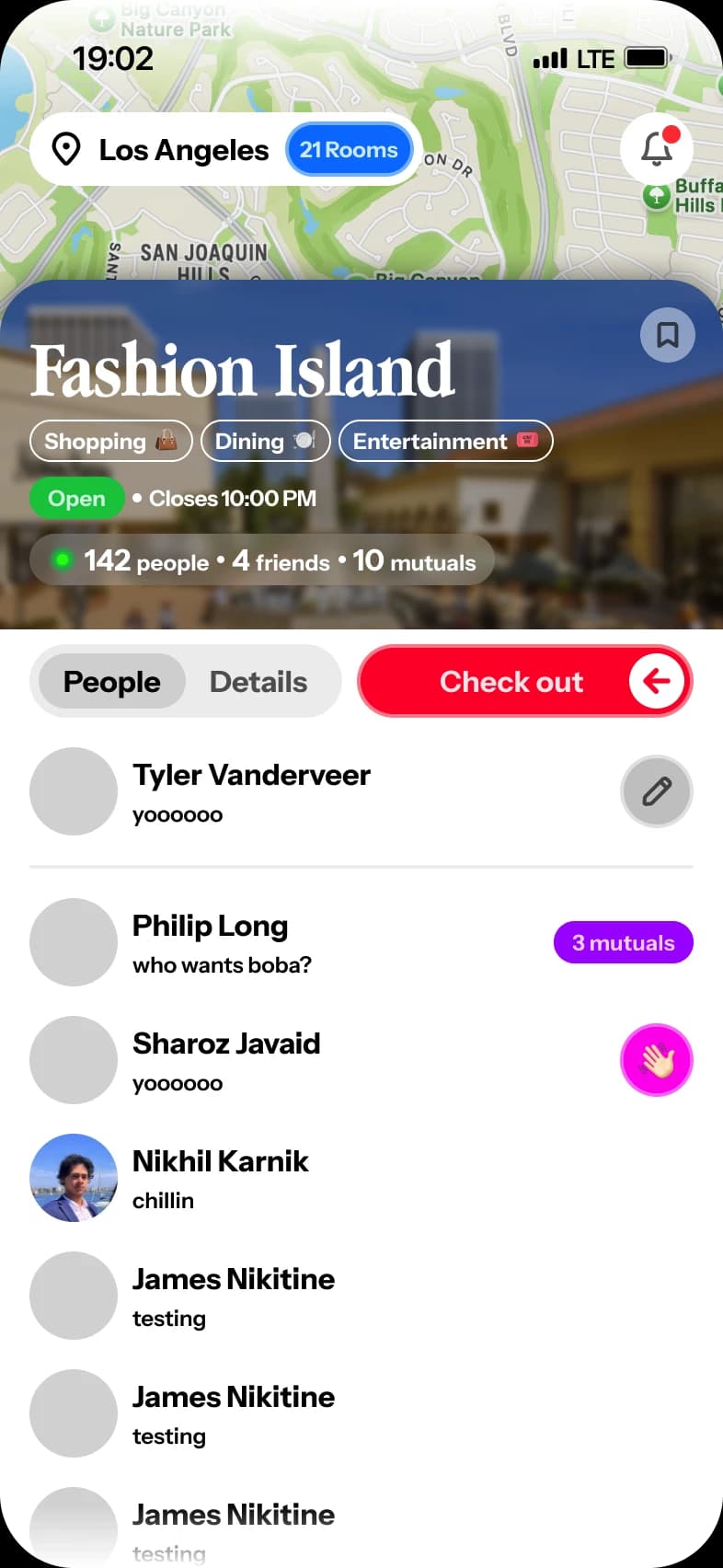
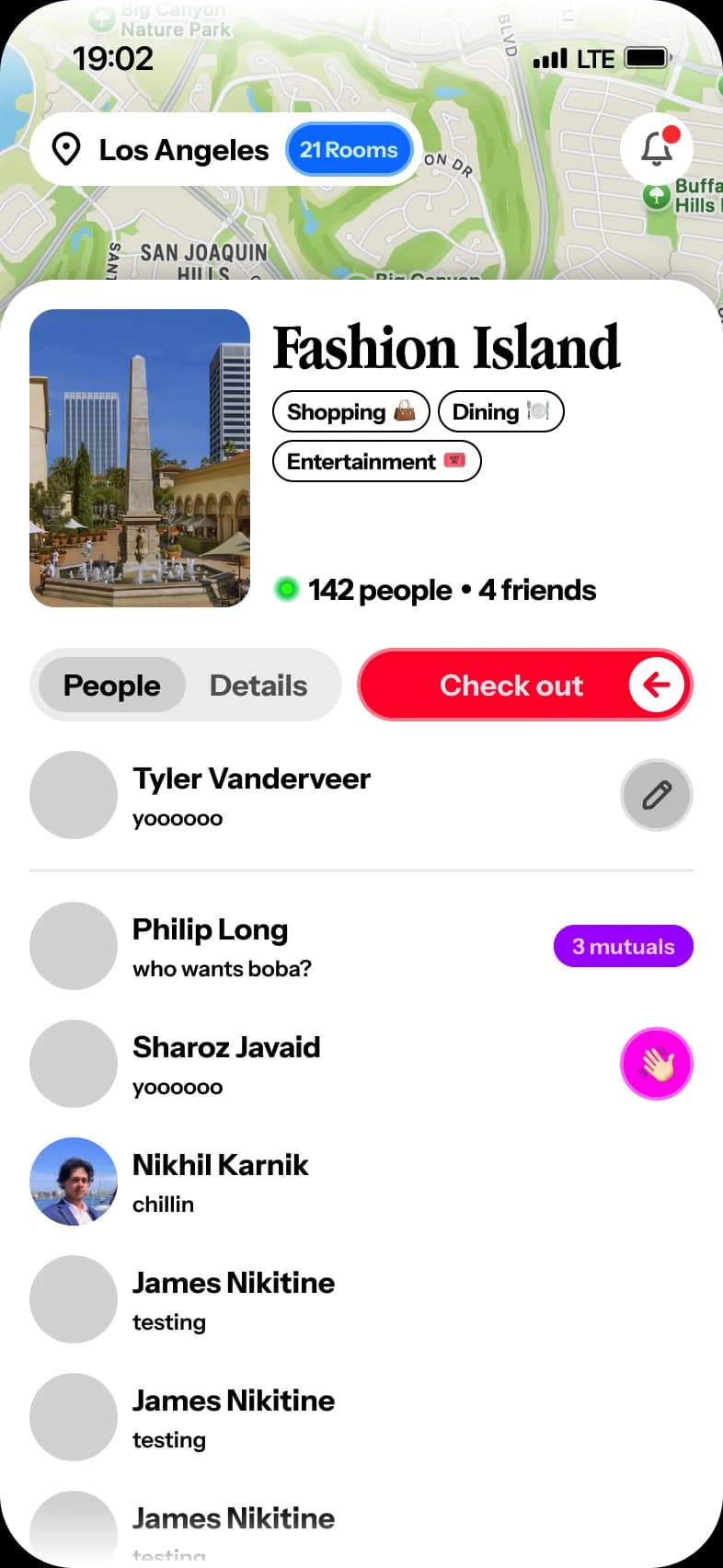
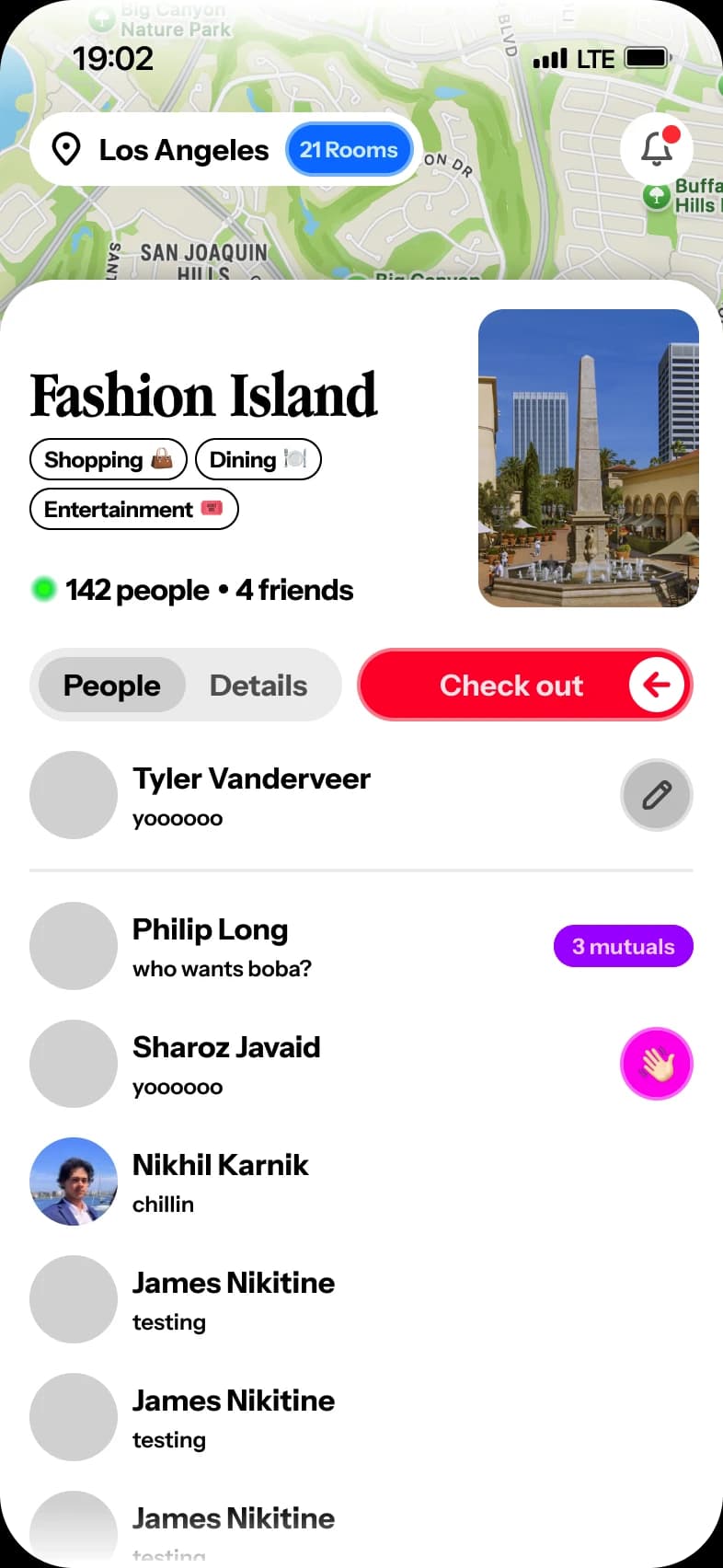
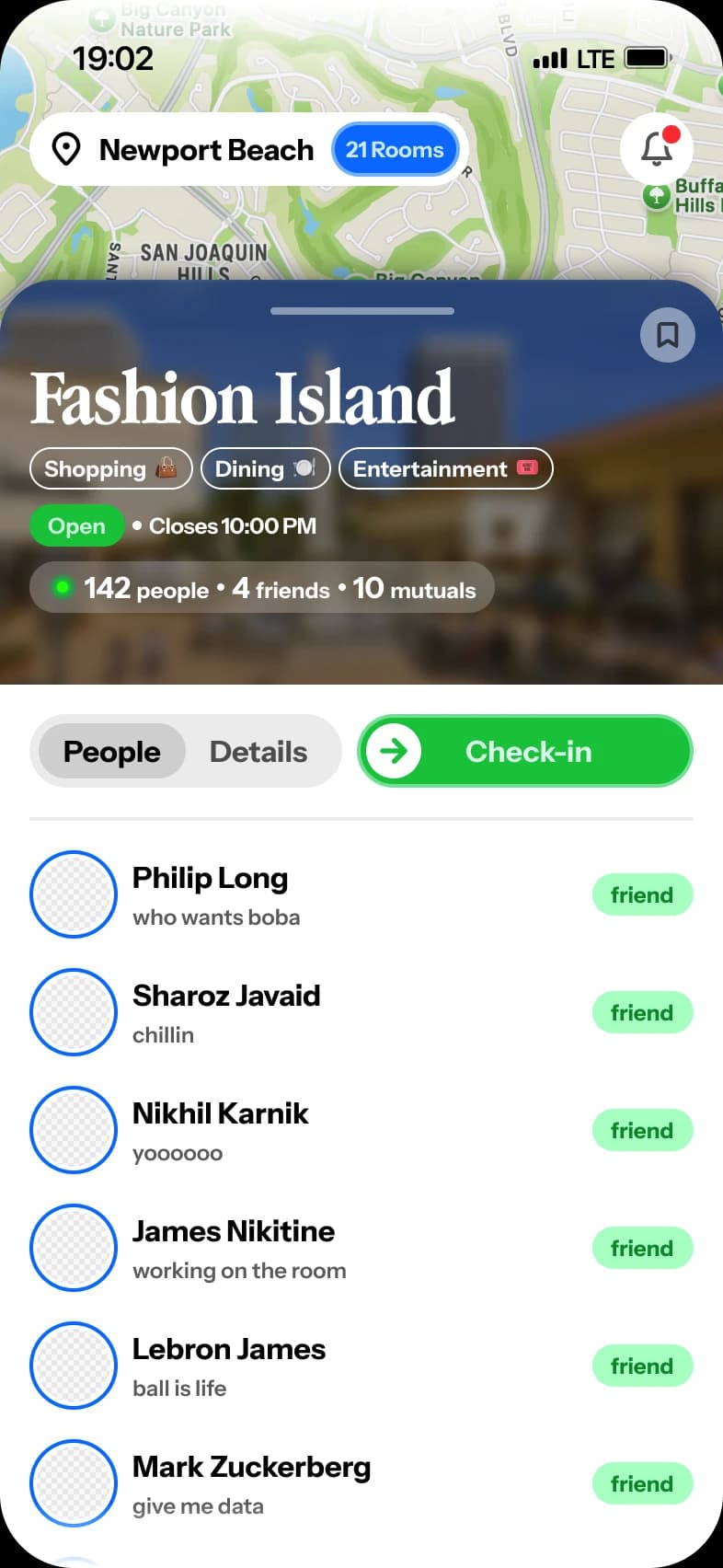
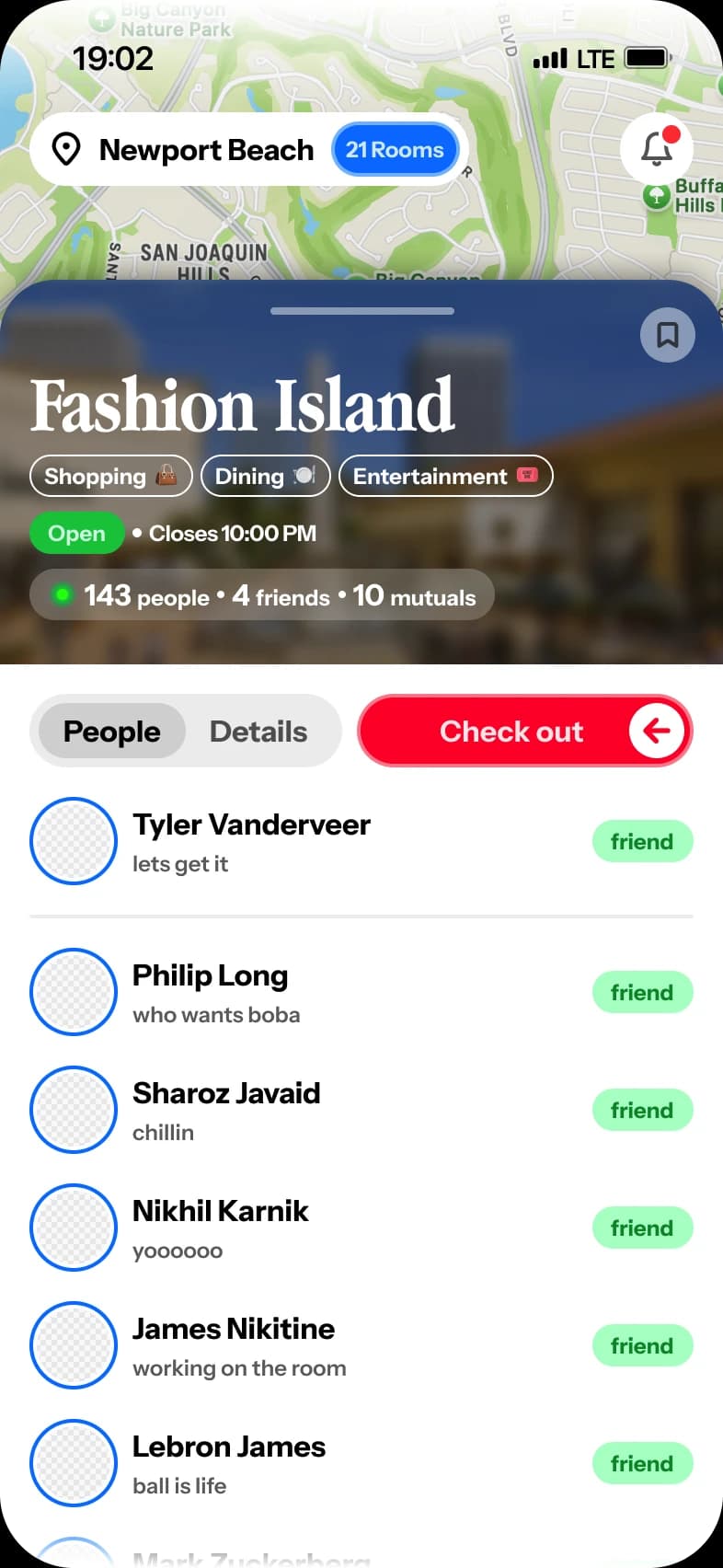
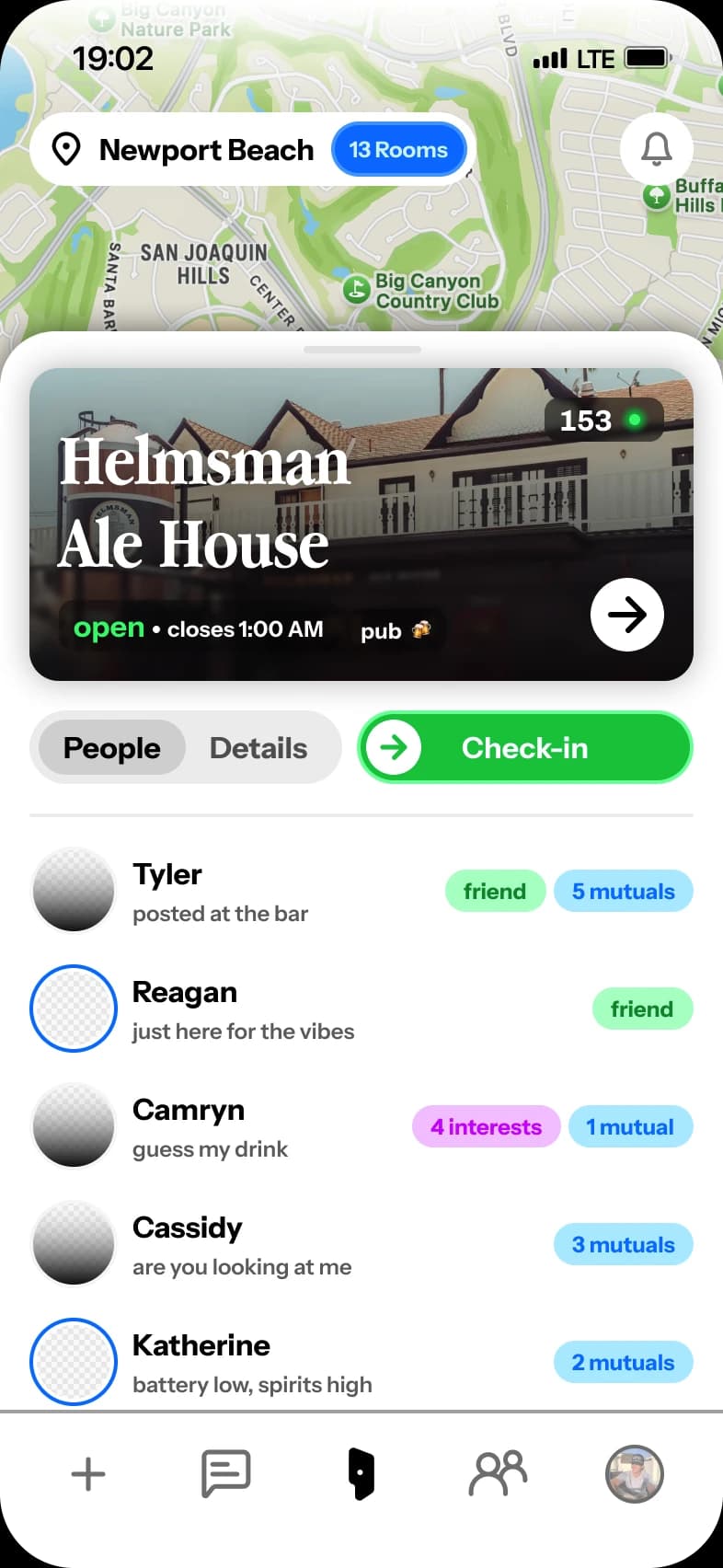
The check-in action was something that I found to be lacking with the old screen. Instead, I opted for a slider at the top of the sheet.
Moving the check-in action to the top allowed for an unobstructed view and easier scrolling through a list of users. Rather than just a tap or a long press, I made it a slider to convey the impact of the action, protect against accidental check-ins, and create an opportunity for delight through a micro-interaction.
A Personal Favorite
While working through the onboarding, there was room for a very small detail that became a personal favorite of mine: a visibility toggle for the phone number input field.
It may seem odd at first, and the team thought so as well, but it was a deeply considered feature.
At the time, most of The Room’s new users weren’t coming from social media downloads but rather in-person marketing and events. This was the plan for the foreseeable future so as a result, most users would be downloading and signing up while they were at a venue or live event. In such an environment, a user’s phone number becomes an extremely sensitive piece of information and must be treated as such.
Full onboarding prototype.